About Our Research
Welcome to the laboratory of evolutionary computation! By applying Darwinian evolution on computing systems, we look for solutions to social, engineering and scientific problems.
Student Research Projects
Here is a summary of some current projects by our students.
Sara Saori Satake
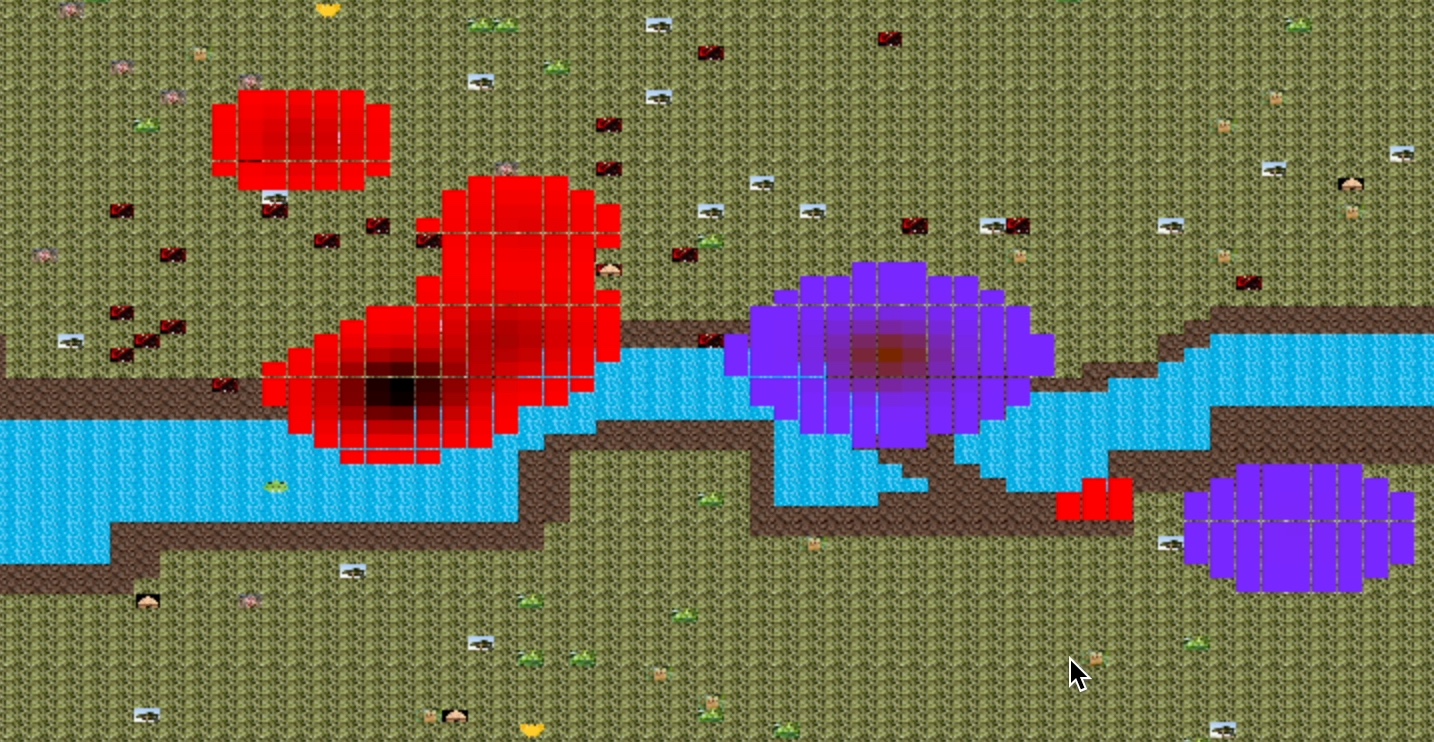
I explore the simulation of early civilizations through agent-based modeling (ABM), a computational approach that represents societies as collections of autonomous agents capable of perceiving, acting, and interacting within a dynamic environment.
At the initial stage, my focus is on modeling a form of reactive communication, where agents rely on cues and information observed directly from their surroundings. To structure this process, I draw inspiration from pheromone-based strategies in Ant Colony Optimization (ACO), adapting them as a mechanism for decentralized communication. Instead of relying on centralized control or explicit symbolic language, agents leave and respond to “traces” in the environment, which gradually shape how information flows across the group. By simulating these interactions over time, my research aims to uncover how such simple and local mechanisms can scale into collective patterns of coordination and meaning-making. Ultimately, this line of work seeks to generate insights into the origins of language, highlighting the ways in which communication systems may have emerged from basic reactive strategies long before the establishment of structured symbolic forms.
Through these models, I aim to provide both a tool for hypothesis testing in the study of human evolution and a broader perspective on how communication and intelligence can arise in complex systems.
Karim Tanjina Saif
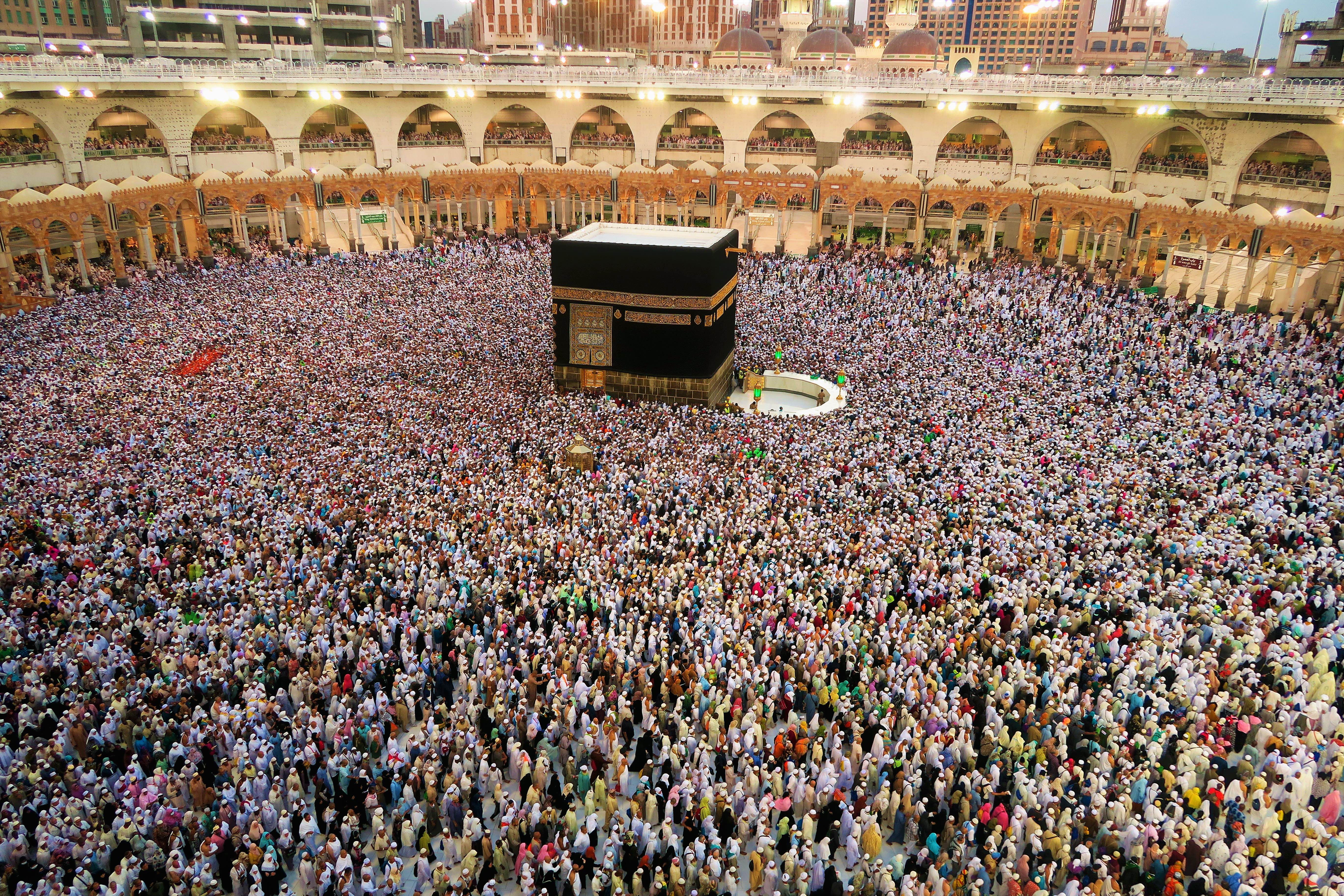
I study how huge crowds move during the Hajj, the annual pilgrimage to Makkah in Saudi Arabia, where millions of Muslims gather, making it one of the world’s largest human gatherings. A key part of this ritual is the Tawaf, where pilgrims circle the Kaaba in the Mataaf area.
My goal is to understand what happens as the space becomes more crowded, such as how people’s movement changes, where congestion begins, and what can be done to keep everyone safe. To explore this, I use Multi-Agent Simulation (MAS), a technology that lets me create virtual pilgrims who move, interact, and respond to different timings, routes, and walking patterns. This ties into Evolutionary Computation, the core focus of our laboratory, because instead of fixing one rule, I let the simulation evolve and discover safer, smoother ways for pilgrims to move around the Kaaba.
In the end, I hope my work can give planners practical strategies for efficient crowd management and make the pilgrimage experience both safer and more meaningful for millions of people.
Felipe Nonato
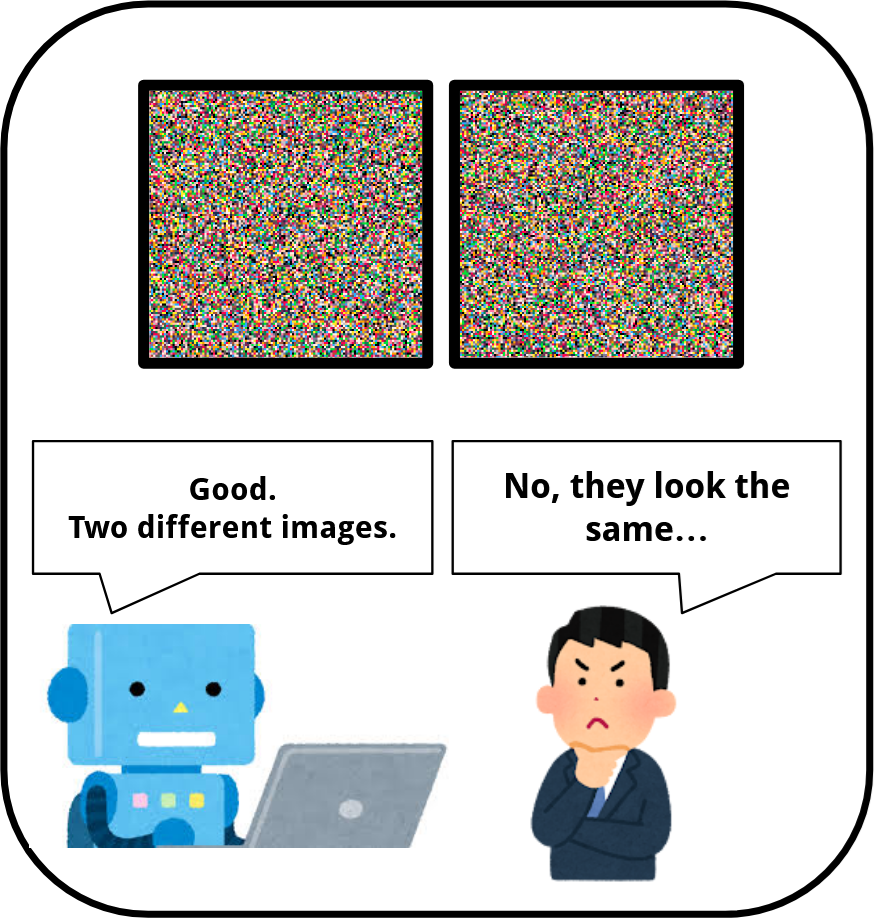
Have you ever thought on playing a game that never ends? A game that never stops giving new experiences, be from a new level or new enemy’s behaviour? This is the goal of procedural content generation (or PCG) research for games: the generation of diverse and functional content for games! PCG research’s biggest goal is to understand how we can generate diverse and functional content. Because something that looks different to the computer might look the same to us. Think of two images generated by setting a random color to each of their pixels. These images are very different in the computer’s point of view, but to us they might look the same “blur”. So, how can we work on the solution to this problem? We inspire ourselves in the capacity of nature’s evolutionary process. Nature’s able to come out with solutions that are diverse (different between themselves) and with quality (functional)! So we seek to understand this process and apply it to PCG’s problem!
Gwénolé Moison
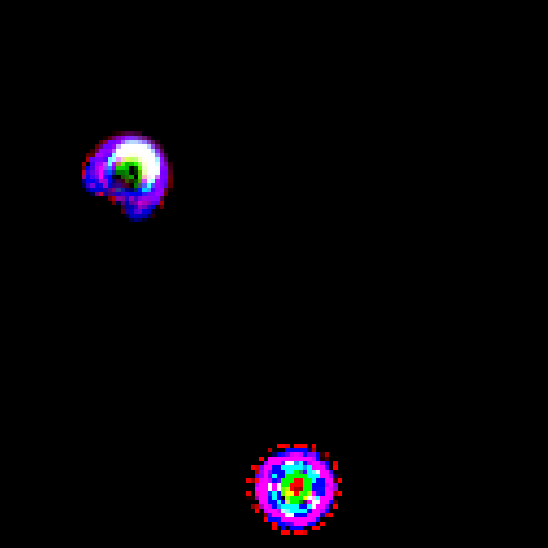
My research aims to provide an algorithm that can find the configurations of a cellular automata corresponding to certain preidentified characteristics.
A cellular automata is a mathematical model that often aims to identify emergent behavior. As such they are mostly inspired by chemistry, physics or in our case life. Because we believe that by observing programmed evolutionary behavior, we will be able to better understand our environment.
In our case, the algorithm I am creating will be a replacer for natural selection. By eliminating all the individuals and species that do not answer well enough our criterias. We, just like evolution, obtain an individual that maximize the chosen traits.
Basically we are applying evolution to mathematics.
To do so I use a lot of techniques from the evolutionary computation field such as genetic algorithms, NEAT and mutations. All of this is programmed in Python with standard libraries
Abe Hiroto
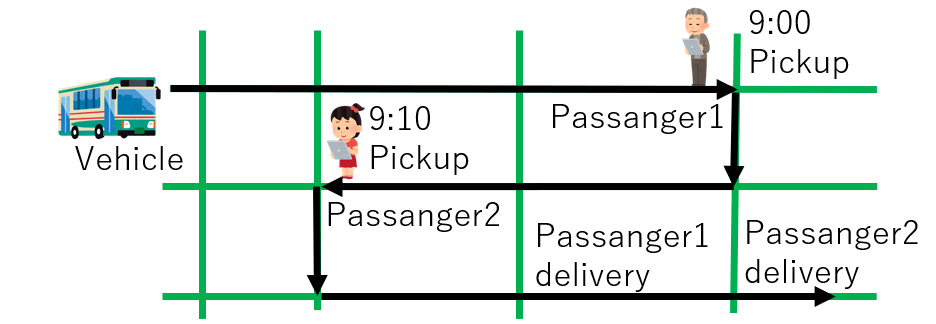
I am researching the Dial-a-Ride Problem, or DARP. DARP is about transporting several passengers from their pick-up points to their drop-off points. In the real world, it is used in demand-responsive transport services. These services can plan routes more flexibly than buses, and provide rides more cheaply than taxis. This problem involves multiple objectives, and I study the trade-offs between them.
In my research, I formulate DARP as a multi-objective optimization problem. By analyzing the shape of the resulting Pareto front, I extract the solutions that best represent the trade-offs among the objectives. I use multiobjective optimisation evolutionaly algorithm. For example, NAGA.
Guilherme Nakahata
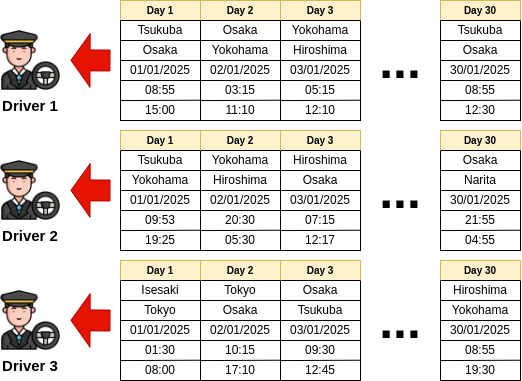
In the operational planning of passenger transport, we can design and build an ideal transport plan. To construct this plan, we can divide it into sub-problems. One of these is the crew rostering problem, which is responsible for creating schedules for drivers. My research focuses on the crew rostering problem in an uncertain environment. Uncertainty can be defined in terms of demand or disruption conditions, and this arises because the optimization process is carried out several weeks before the actual operation.
The main focus of this study is the development of methods to deal with optimization scenarios under uncertainty. To achieve this, I plan to use landscape analysis and evolutionary algorithms. With the results, we aim to apply the approach in other scenarios and explore its use in different types of problems that can also involve uncertainty.
Yusen Du
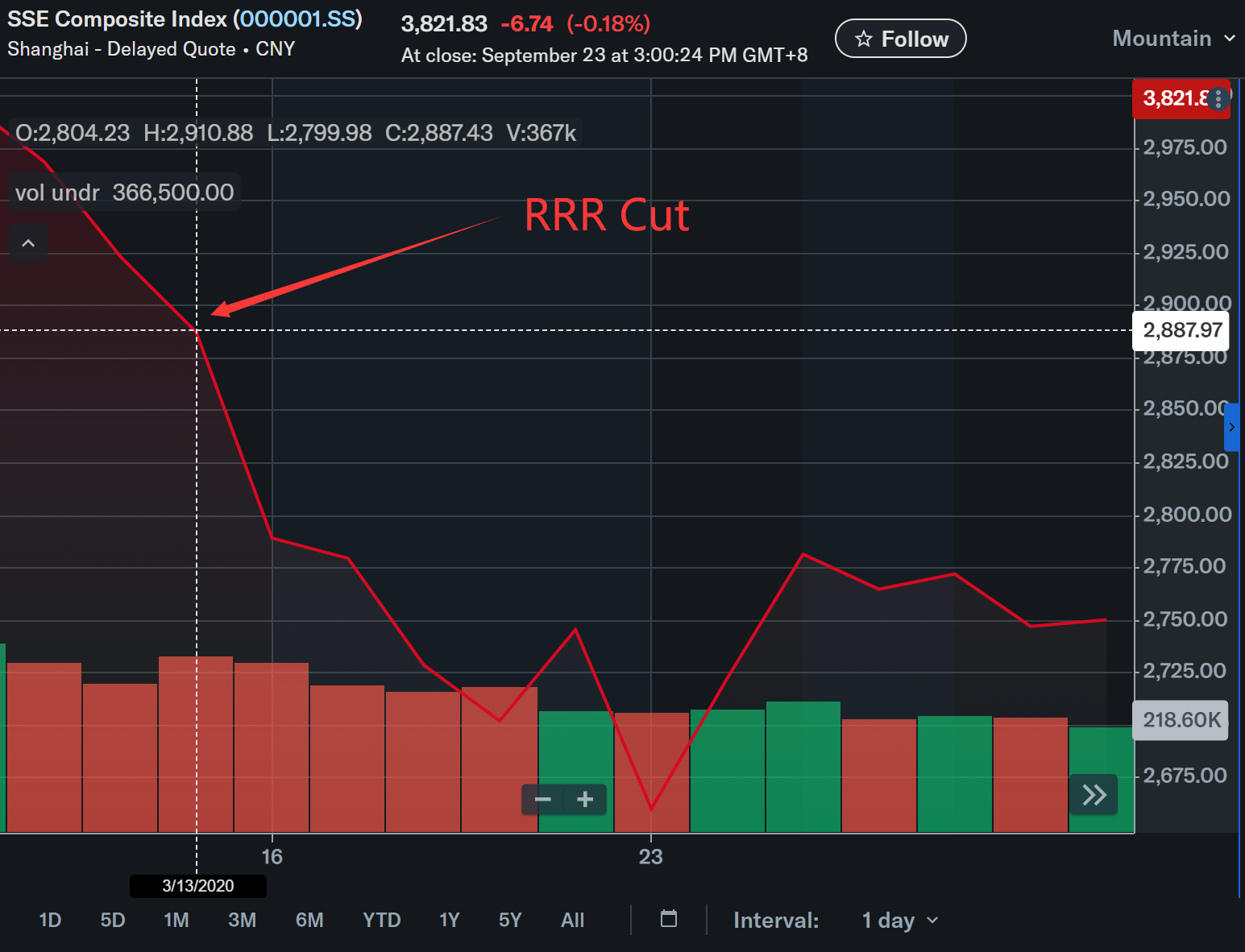
My research starts with a simple question: why do markets often react unpredictably to economic regulation policies? A key reason is that traditional models fail to capture the irrational behavior of thousands of individual investors.
To solve this, I use Agent-Based Modeling (ABM) to build a virtual stock market powered by real data. In this simulation, each agent acts like a real investor with its own unique strategies.
But my main goal isn’t just to simulate the market, it’s to find the best policies. For this, I use genetic algorithm, a kind of evolutionary computation algorithm. The algorithm tests many different policies inside the simulation by selection, crossover and mutation, it evolves better policies over thousands of generations, finding the ones that create the healthiest market.
The goal of my research is to provide a tool that helps governments understand how real markets might respond to new regulation policies, and help them to make policies more suitable.
Wu Zitong
My research uses evolutionary computation to explore the evolution of voxel-soft robots. In a virtual environment, voxel-soft robots adapt various strategies, and both their controllers and bodies iteratively evolve through processes of selection, crossover, and mutation. Over generations, they gradually learn to perform basic tasks such as walking, crawling, and jumping. This process does not rely on manual design but instead generates new morphologies and behaviors automatically through evolution.
My goal is to study and analyze the evolution of soft robots under specific conditions and to observe how they gradually develop different modes of movement.
Contact
For contact information, please refer the laboratory website at conclave.cs.tsukuba.ac.jp